
Wildfire seasons are longer. Insurance requirements are stricter. Building codes are evolving toward low carbon, high performance energy design. In this landscape, I see a growing responsibility for engineers to lead in safety and in sustainability.
At EA Structural Engineering, my focus is to help clients, architects, developers, and builders create durable, fire resilient, energy efficient structures aligned with climate conscious construction goals. One of the most effective ways I achieve this is through Insulated Concrete Form (ICF) systems.
ICF construction brings strength and environmental responsibility together in one integrated system. It offers clients a structure that is safer in wildfire zones, more energy efficient to operate, and fundamentally lower in carbon impact.
What Are ICFs?
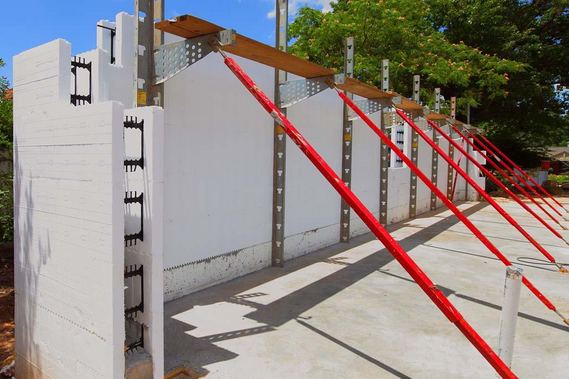
Insulated Concrete Forms are hollow foam blocks or panels that interlock to create the framework for reinforced concrete walls. Once the forms are stacked, rebar is placed, concrete is poured, and the result is a monolithic, insulated wall system with solid concrete at the core and continuous insulation on each face.
Unlike traditional framing, where insulation is added later and gaps allow heat and smoke transfer, ICFs provide an airtight, energy efficient, fire resilient envelope from the start.
How are ICFs Used?
ICF systems are successful across a wide range of building types. From luxury homes designed for beauty and comfort, to multi-unit communities and mixed-use developments redefining energy and acoustic standards, ICF construction scales efficiently while maintaining quality and environmental responsibility.
Each project, residential, commercial, or civic, benefits from a system delivering strength and durability, low carbon performance, and code compliant energy efficiency.
In California and Nevada, ICF systems offer two essential benefits: carbon reduction and fire resilience.
Why are ICFs Important in the Context of Wildfire Rebuilding?
In post wildfire regions and climate sensitive zones, ICFs give communities the opportunity to build stronger and reduce future vulnerability and loss. With more than 31,000 wildfires recorded in the U.S. in 2017, an 8% increase from the prior year, the risk remains constant for communities across California and the West Coast.
Fire resilient concrete structures offer a level of security wood framing cannot provide.
How ICFs Improve Fire Resilience in Structures
Fire performance is one of the strongest arguments for using ICFs in residential and commercial buildings. The concrete core is noncombustible, and the foam insulation is flame retardant.
Independent testing under ASTM E119 and NFPA 285 consistently show ICF walls achieve fire ratings of up to four hours, compared to 30 to 60 minutes for wood framed walls. Even under direct fire exposure, the wall system maintains its structural integrity, making it a reliable option for homes, multi-family projects, mixed-use buildings, and commercial structures in high risk fire zones.
In wildfire prone and fire rebuild regions across California, including:
- Shasta County,
- Paradise in Butte County,
- Nevada County,
- the Lake Tahoe region,
- El Dorado County,
- Sonoma and Napa Counties,
- Marin County,
- the Santa Cruz Mountains,
- Monterey County,
- the Los Gatos Hills,
- Woodside and Portola Valley,
- Contra Costa County,
- Ventura County,
- Thousand Oaks,
- Los Angeles County,
- Altadena,
- Malibu,
- Pacific Palisades,
- Laguna Beach,
- and San Diego County,
Homeowners and architects are increasingly turning to resilient structural systems for new homes and rebuilds. In high risk areas, fire resistant envelopes with systems like ICF provide significantly better performance, safety, and long term durability than conventional wood framing.
Structures built with ICFs often remain standing when neighboring wood framed buildings are reduced to ash.
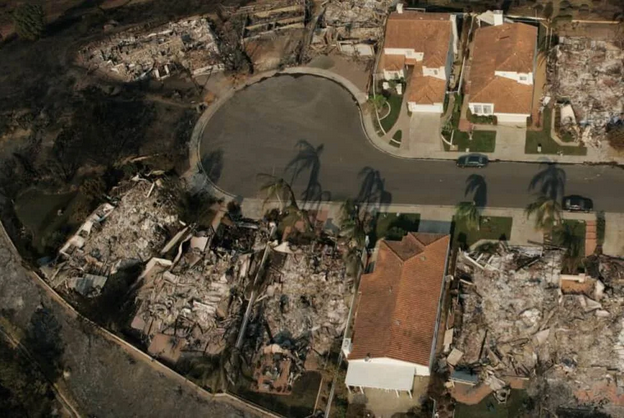
Photo Credit: Element ICF
For clients in wildland urban interface (WUI) zones, this level of protection translates to reduced property risk, easier insurance approvals, and long term security for both occupants and investments.
How ICFs Are Sustainable
ICFs extend beyond fire and building safety, they form a foundation for low carbon, high performance design. Clients committed to sustainability, energy savings, and climate aligned construction choose ICF systems because they offer an immediate path to reducing operational and embodied carbon while improving comfort and resilience.
ICFs Can Be Sustainable and Maintain Durability
Concrete is one of the most durable building materials available, and it’s why I’m committed to reducing its carbon impact by integrating it with high efficiency ICF systems and sustainable concrete mix design.
Today, innovators across the industry are developing new technologies to reduce concrete’s carbon footprint while preserving its strength, durability, and long term performance. One of the most effective pathways toward more sustainable concrete is the use of supplementary cementitious materials (SCMs).
I expand on this in a recent article where I outline how strategic SCM use improves performance while reducing both CO2 intensity and material costs.
How ICFs Can Reduce Energy Bills
ICF wall and roof systems reduce operational carbon, the energy a building consumes over its life cycle. The combination of thermal mass and continuous insulation significantly lowers energy demand.
In measurable terms, energy bills are reduced by 40 to 60% compared to conventional homes.
Example Cost Analysis Over 30 Years of Wood Frame vs ICF Home:
For a 2,500-square-foot home with costs calculated at a 2% inflation rate over 30 years:
Wood Frame Home
- Mortgage: $375,584
- Utilities: $106,650
- Total: $482,235
ICF Home
- Mortgage: $422,536
- Utilities: $31,995
- Total: $454,531
Clients who value long term savings, lower operating costs, and high performance homes choose ICF systems for measurable lifetime energy efficiency.
How ICFs Can Reduce Construction Waste
Construction waste in ICF projects can be reduced by up to 75% compared to traditional wood framed methods. Many ICF systems, such as Amvic blocks, are also manufactured with over 60% recycled content, further lowering environmental impact. For context, a typical single family home generates roughly 8,000 pounds (4 tons) of construction waste, including wood, drywall, metal, etc. The amount varies based on home size, construction type, and the efficiency of the building process. Because waste directly affects embodied carbon, reducing it is an effective opportunity for improving sustainability in residential construction.
How ICFs Meet SB 596 Compliance
California Senate Bill 596 sets embodied carbon reduction targets for cement and concrete. Since ICF assemblies rely on concrete, they can be paired with low carbon concrete mix designs, enhancing their effectiveness as a sustainable building system. Senate Bill 596 is consistent with the SE 2050 Commitment’s objective of driving structural systems toward net zero embodied carbon.
For me and my clients, alignment with Senate Bill 596 and SE 2050 isn’t optional, it’s essential.
California Senate Bill 596 establishes phased carbon reduction targets through 2035 and net zero goals by 2045. While the law will eventually require industry wide change, the tools and technologies to design toward these targets are already available. Many firms will wait until the deadlines arrive. I choose not to. Early alignment with SB 596 and SE 2050 allows me to reduce material use, improve constructability, and support my clients with cost effective, forward thinking structural solutions. ICFs serve clients who value high performance buildings and want their projects aligned with long term climate targets such as Senate Bill 596 and SE 2050.
Engineering must advance climate goals and deliver cost effective, high performance structural solutions.
How ICF Construction Delivers Efficiency and Cost Savings
Because ICF systems serve as both structure and insulation, they eliminate extra steps, reducing labor, waste, and coordination demands. ICFs replace multiple separate assemblies: structure, insulation, sheathing, and vapor barrier, with a single system achieving all functions. This results in fewer materials, less waste, and fewer potential failure points.
The process of building with ICFs is efficient and precise. The forms are stacked to create walls, steel reinforcement is placed for strength, and concrete is poured into the forms, which remain in place as insulation. Finishes such as stucco, siding, or cladding can then be applied directly to the surface.
Through advanced concrete and ICF detailing approaches, clients routinely save 10 to 20% on total construction costs while achieving higher performing buildings. This approach balances material efficiency with structural strength to deliver both durability and economy. It is efficiency driven design in practice: building smarter, more sustainably, and with greater intention.
I expand on these material-optimization strategies in a recent article on how thoughtful engineering can offset cost pressures created by current tariffs.
How ICFs Provide Overall Climate Resilience
ICFs provide comprehensive resilience. These systems withstand high winds up to 150 mph, covering 99% of U.S. tornadoes, and offer superior resistance to flooding, moisture, pests, mold, impact, and vibration.
In regions such as coastal California, Tahoe, and Nevada, ICF structures maintain stable performance under seismic loads, temperature extremes, and prolonged environmental exposure. When the goal is a building built to endure decades of climate uncertainty, ICF construction offers unmatched strength and quality.
ICFs vs. Conventional Building Methods
Many clients want to understand how ICF compares to traditional systems such as wood framing, cold formed steel, or concrete masonry units (CMU), and the differences are significant:
| Property | Wood Framing | Steel Stud | CMU | ICF |
| Fire Rating | 30–60 min | 45–90 min | 2–3 hr | Up to 4 hr |
| Energy Efficiency | Moderate | Low | Moderate | High (40–60% savings) |
| Thermal Mass | Low | Low | High | High |
| Air Tightness | Poor | Good | Good | Excellent |
| Construction Time | Moderate | Moderate | Moderate | Fast (30–40% time savings) |
| Carbon Profile | Low embodied / high operational | High embodied | High embodied | Balanced and reduced operational |
How ICFs Integrates with Roof Systems, Electrical, HVAC, Plumbing, etc.
One of the misconceptions about ICF is it complicates coordination with other trades. In my practice, the opposite is true. ICF systems integrate seamlessly with roof systems, whether truss, steel, or concrete, as well as with electrical, plumbing and HVAC installations. Electrical conduits and plumbing chases can be molded directly into the forms, and mechanical systems benefit from the stable thermal environment the walls provide. Clients who want cleaner coordination and reduced field variability choose ICF systems for their projects.
To support this, EA Structural Engineering prepares drawings with clear, detailed interfaces so builders understand exactly how structural elements come together. This level of clarity ensures no surprises in the field and no confusion during construction.
Popular ICF Systems and Technologies
Several leading manufacturers offer high performance ICF systems suitable for a range of project types. EA Structural Engineering commonly specifies products from companies such as Amvic, Nudura, BuildBlock, and Element ICF, each engineered for durability, constructability, and sustainability. Each system is evaluated based on regional supply availability, verified performance data, and embodied carbon to ensure alignment with each project’s structural goals and environmental objectives.
ICF Manufacturer Resources:
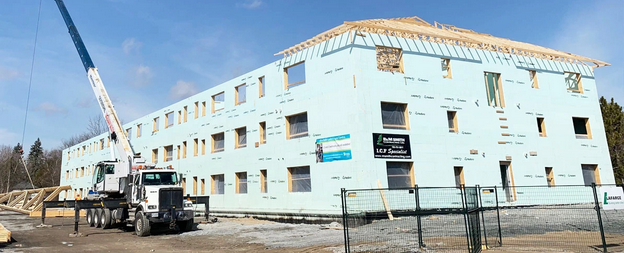
Photo Credit: Nudura
ICF FAQs
Here are some of the most common questions I receive from my clients about building with ICFs.
Are ICFs fireproof?
No material is truly fireproof. However, ICF structures rank among the most fire resistant systems available, maintaining structural integrity even under direct fire exposure.
Do ICFs release harmful emissions during fire?
No. The EPS foam used in most ICF systems meets strict smoke and toxicity standards. Furthermore, when exposed to extreme heat, the foam melts away rather than burning and does not contribute additional fuel to the fire.
How much does it cost to build with ICF?
Initial construction costs for ICF buildings are typically 3–5% higher than conventional framing. However, material optimization, faster installation, and long term energy efficiency offset this difference, resulting in cost parity during construction or savings within the first few years of operation.
What are the negatives of building with ICFs?
While ICF systems offer significant performance advantages, they also present a few practical considerations. The polyurethane foam components used in many ICF products raise environmental questions, though newer systems now incorporate recycled or mineral based materials to reduce impact.
Construction requires precise bracing and concrete consolidation to prevent voids or form blowout, and qualified installers are essential for quality control.
The solid wall construction can limit flexibility for future modifications, and thicker assemblies may slightly reduce usable interior space compared to framed systems.
With thoughtful design coordination these challenges are readily managed to deliver durable, high performing results.
What are the three main types of ICFs?
The three primary ICF configurations are flat wall, waffle grid, and screen grid.
EA Structural Engineering primarily designs with flat wall ICF systems, which provide a continuous reinforced concrete core and have the most established design data, testing, and code support. These systems offer predictable strength, straightforward detailing, and compatibility with both residential and commercial applications.
Alternative configurations, such as waffle or screen grids, can be effective for certain projects and have more limited design references and testing history.
How ICF Design Redefines Structural Engineering
ICF construction is not a niche technology. It is part of a broader movement toward climate resilient, low carbon engineering. It is a practical, constructable way to meet the demands of future ready design without burdening clients with higher costs.
At EA Structural Engineering, I approach ICF projects with three priorities:
- Reduce Carbon Impact Through Material Optimization
I approach each project with the goal of minimizing embodied carbon while maintaining structural integrity and cost efficiency. This includes using SCM concrete mixes and performance based design strategies aligning with SB 596 and SE 2050. - Enhance Life Safety and Resilience Through Smart Structural Systems
My designs emphasize fire resilience, seismic performance, and long term durability. I view ICF systems as a way to protect people and property in wildfire and earthquake prone regions while exceeding minimum code requirements. - Delivering Long-Term Value Through Efficiency and Clarity
I balance cost, constructability, and performance, ensuring structures are optimized, efficient, and easy to build. Each ICF design is documented for clarity, to support well-coordinated field execution, saving clients time and money while delivering high performing, future ready buildings.
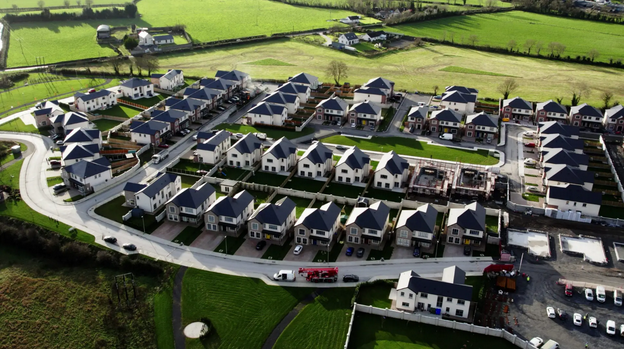
Photo Credit: Amvic
Final Thoughts About ICFs
When I sit down with clients, whether it’s an architect envisioning a new hillside home, a developer leading a multi-unit residential or mixed-use project, or a contractor tackling a complex commercial build, discussions tend to come back to one question: How can we build better?
Insulated Concrete Forms are a clear part of the answer. They combine strength, energy efficiency, and environmental responsibility in a single system, offering exceptional performance in natural disasters and fire prone regions. ICFs deliver economically and environmentally sound solutions other structural systems cannot match.
If you are ready to explore ICF construction for your next project, let’s talk about how we can align the design with your goals. Together, we can design structures built to perform beautifully and remain resilient for decades to come. ICF systems are one component of a larger design strategy and through my experience and study of innovative ICF techniques, there are many ways to reduce cost while building more sustainably.
📞 Call me at 530-208-0839
EA Structural Engineering – Future Forward Design for Resilient and Sustainable Buildings